
Carbon Offsets Explained
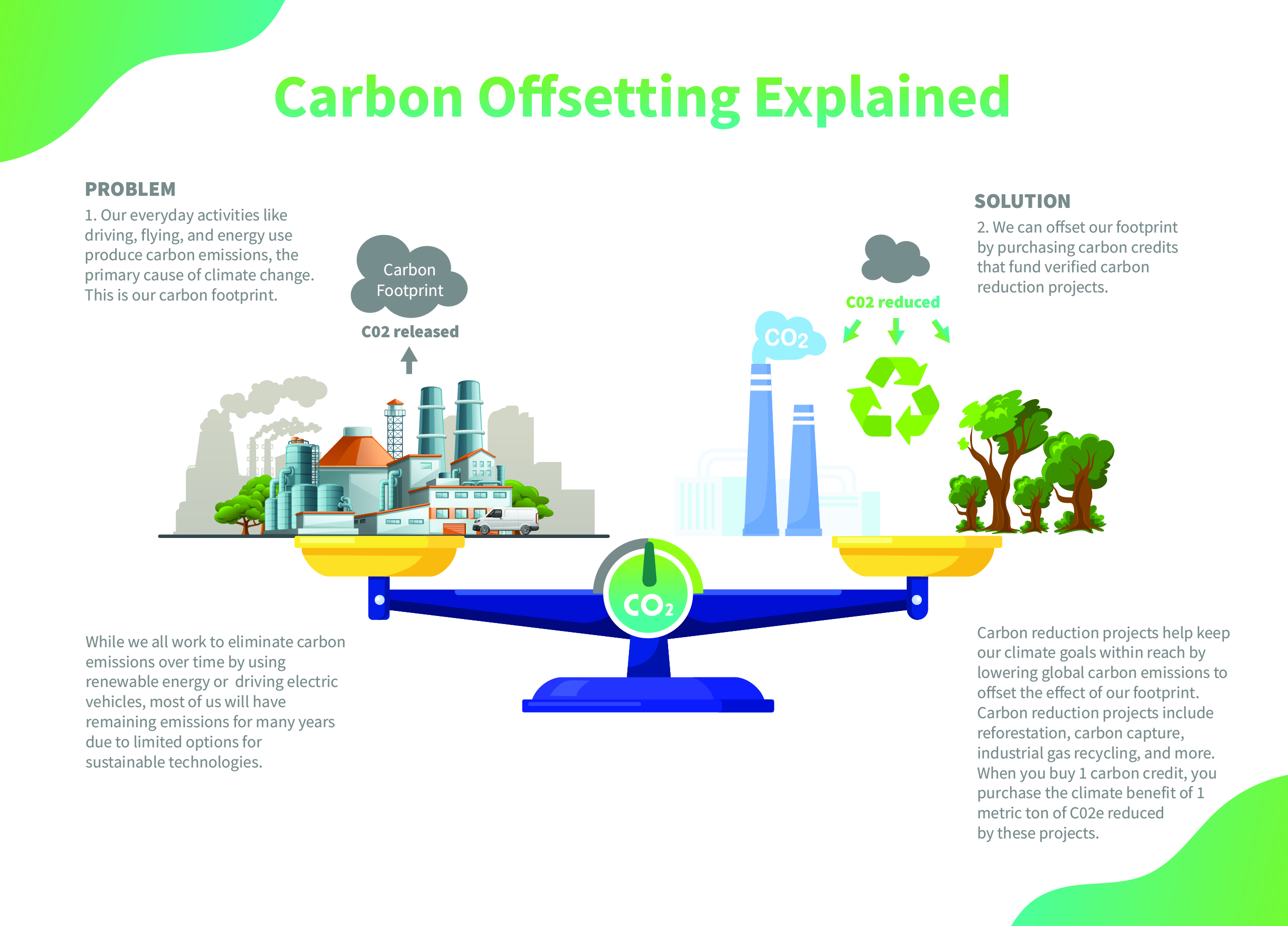
Carbon offsetting funds projects in communities across the world that reduce or remove greenhouse gas (GHG) emissions, going beyond what you can achieve through individual action. By purchasing carbon credits, you can fund verified reductions or removals equal to the emissions you have not yet been able to cut, even though the projects are located elsewhere. Offsetting works best alongside your own efforts: measure your footprint with the carbon footprint calculator, cut what you can, and then offset what remains.
Key takeaways
- A carbon credit represents one metric ton of CO2 equivalent (CO2e) that a project has reduced or removed, verified by an independent third party.
- Credits finance the construction and ongoing operation of carbon reduction projects.
- There are two main kinds: reduction (avoidance) credits and removal credits.
- Quality varies. Look for independent verification, additionality, and protection against double counting.
- Offsets fund reductions or removals elsewhere, and they work alongside cutting your own emissions, not instead of it.
What is a carbon credit?
Carbon credits are the financing mechanism for carbon reduction projects. A project generates a carbon credit for every one metric ton of CO2e (the CO2 equivalent of GHGs) that is reduced or removed and verified by an independent third party. Projects sell their carbon credits every year in order to finance their construction and ongoing operation. When you buy a carbon credit, you fund that verified carbon reduction and receive the right to claim it.
There are many different types of carbon reduction projects. For example, a landfill can install a landfill gas system to capture methane that would otherwise leak into the atmosphere. Methane traps roughly 27 to 30 times as much heat as CO2 over 100 years, as we explain in our guide to greenhouse gases. Landfill gas systems are not required at many landfills around the world, and they are expensive to install and maintain. The construction and operation of a landfill gas project is financed by selling carbon credits every year based on the amount of emissions reduced. By funding reductions like this, individuals and organizations can take responsibility for emissions they have not yet been able to cut.
What are the different types of carbon credits?
Carbon reduction projects lower greenhouse gases in the atmosphere in two ways:
1. By preventing new greenhouse gases from entering the atmosphere. Examples of these projects include landfill gas capture and industrial gas recycling. These projects generate carbon avoidance or carbon reduction credits.
2. By removing greenhouse gases from the atmosphere. Examples of these projects include reforestation and direct air capture (DAC). These projects generate carbon removal credits. See our posts on tree planting offsets and natural carbon removal for more.
Many projects can also create other benefits. For instance, reforestation projects can restore ecosystems, support threatened species, and provide jobs and education for surrounding communities. These benefits vary from project to project and are not guaranteed, so it helps to look at each project's details on the projects we support page.
What makes a carbon credit high quality?
Not all carbon credits are equal. Four things matter most:
- Independent verification. The reduction or removal is measured under an approved methodology and checked by an independent third party. Registries such as Verra, Gold Standard, American Carbon Registry, and Climate Action Reserve set these rules.
- Additionality. The project would not have happened without carbon credit revenue.
- No double counting. Each credit is tracked on a registry so only one buyer can claim it.
- Permanence for removals. For projects that store carbon, such as forests, it matters how long the carbon stays stored and what protections exist if it is released, for example by wildfire.
Read more in our guide to finding high quality offsets and the standards behind Terrapass projects.
Carbon offsets in 2026: what has changed
2026 snapshot
- Stronger quality checks: The Integrity Council for the Voluntary Carbon Market's Core Carbon Principles label now covers an estimated 95% of cumulative voluntary market issuances across 13 approved programs, with 41 methodologies approved and 25 rejected.
- New rules on how to talk about offsets: In the EU, rules that began applying on September 27, 2026 prohibit claims that a product has a neutral, reduced, or positive climate impact based on offsetting alone. They do not stop companies from describing their investment in carbon credit projects accurately.
- Recommended framing: The Science Based Targets initiative describes credits as a way to take responsibility for ongoing emissions, not as a way to make a company or product neutral.
How do carbon credits fit into a climate plan?
At Terrapass, we talk about three steps: Calculate your emissions, Conserve by reducing them over time, and Offset the residual emissions you cannot yet cut. Terrapass's Global Portfolio includes reforestation, REDD+ forest conservation, landfill gas capture, orphan oil well closure, industrial emission reduction, and residential solar installation, with credits certified against recognized standards including Gold Standard, Verified Carbon Standard, Climate Action Reserve, American Carbon Registry, Puro.Earth, and Isometric.
Ready to start? See carbon offsets for individuals or carbon offsets for business, learn the difference between a carbon offset and a carbon credit, or read the emissions reduction FAQ. For the bigger picture of how money flows toward climate projects, see our guide to carbon finance systems.
Sources for the 2026 data:
Climate Bonds Initiative, Global State of the Market 2025 (context on sustainable finance)
EUR-Lex, Directive (EU) 2024/825
Science Based Targets initiative, Corporate Net Zero Standard V2 draft