This leaves many people and organizations wondering if creating carbon credits is a profitable venture. Below, we cover the topic of creating carbon credits, even in the private sector, and selling them for a profit.
Key takeaways
- Yes, you can earn money from carbon credits, either by trading them or by generating your own through emissions-reducing or carbon-sequestering activities.
- One carbon credit always equals one metric ton of CO2 or an equivalent greenhouse gas, but its dollar value swings widely based on quality, project type, and market demand.
- Broad market averages sit far lower than many people assume, closer to $4-15/ton, while high-integrity, quality-screened credits that serious corporate buyers want run $15-80/ton and up.
- Landowners and farmers can generate sellable credits through reforestation, cover cropping, converting land to prairie, regenerative agriculture, and no-till farming.
- There’s no legal minimum acreage required to create carbon credits, but the payout has to be worth your time and the marketplace’s minimum requirements.
Carbon Credit Prices in 2026: The Latest Data
Carbon credit pricing has actually gotten more complicated since this became a mainstream topic, not less. Here’s what current market data shows, based on the Ecosystem Marketplace State of the Voluntary Carbon Market report and MSCI Carbon Markets’ 2025 quality analysis.
2026 carbon credit pricing snapshot
- Broad market average: The widely cited Ecosystem Marketplace benchmark puts the overall voluntary market average at roughly $4-6 per ton, a figure dragged down by a large volume of legacy, lower-quality credits still being traded.
- Quality-tiered pricing: MSCI’s 2025 analysis found that high-rated credits (A to AAA) averaged $14.80/ton, while low-quality (CCC-B) credits averaged just $3.50/ton, roughly a 4x spread based on quality alone.
- What serious buyers actually pay: Corporate buyers seeking ICVCM Core Carbon Principles-aligned, audit-ready credits report blended portfolio averages closer to $25-80 per ton, with premium engineered removals (like direct air capture) running $150-500+ per ton.
- Agricultural/soil carbon: This segment specifically averages lower, around $4-6/tCO2e broadly, though individual programs can pay $10-35/ton depending on methodology and region.
The takeaway: there’s real money in carbon credits, but “how much” depends enormously on whether you’re looking at market-wide averages or the higher-integrity segment that most credible buyers now compete over.
Can You Make Money From Carbon Credits?
Yes, you can make money from carbon credits or carbon offsets, since you can buy and sell these credits just like any other commodity on the open market. This is how it works: a business or organization reduces their carbon emissions, that is, the amount of carbon dioxide (CO2) emissions or any equivalent greenhouse gas emissions (GHG emissions) they produce. They receive a carbon credit for each metric ton of carbon emission reduction, sequestration (carbon capture), or destruction.
The business or organization then sells that carbon credit on a voluntary carbon marketplace. A business, organization, or individual who emits excess carbon can offset their emissions by purchasing a carbon credit or offset on the marketplace to balance out their emissions.
For example, a business owner needs to travel across the country to attend an important meeting with an investor, and in this situation, a virtual meeting won’t suffice. So they have no choice but to fly there, making them responsible for tons of CO2 emissions. The business can offset these emissions by purchasing carbon offset credits on the voluntary marketplace. This can also be done by an individual who is looking to live as carbon neutral a life as possible.
One critical nuance to remember is that there is a difference between a carbon credit and a carbon offset. Carbon credits are issued based on a fixed amount of carbon the government permits an organization to emit, sometimes called an emissions cap. If they produce fewer emissions, an organization can sell their credits to other organizations. However, if an organization exceeds their emissions cap, federal laws require the company to purchase credits from other organizations through compliance markets. This is called a cap-and-trade program.
A carbon offset, which is sometimes also called a carbon credit or a carbon removal credit, is created through a voluntary reduction of CO2 emissions that a third-party organization verifies. Once verified, you’re issued carbon removal credits you can sell on a voluntary carbon credit market.
How Much Do Carbon Credits Sell For?
Like most other commodities, carbon credits don’t have a fixed price. Instead, their pricing fluctuates with supply and demand. It also fluctuates with complexity, which is called a cost-based model. The cost-based model sets the fair-trade minimum price to cover the costs of a carbon-offset program.
An example is blue carbon credits, which involve restoring seagrasses to help sequester CO2 and other GHG emissions. This is a detailed process that generally comes at a higher cost than most emissions-reducing projects, so these carbon removal credits often sell for higher prices.
It’s worth being precise about where “carbon credits cost $40 to $80 per ton” figures actually come from: that range reflects what buyers pay for high-integrity, quality-screened credits specifically, not the market as a whole. The broader voluntary market average is considerably lower, around $4-6 per ton according to Ecosystem Marketplace’s most recent analysis, since it includes a large volume of older, lower-quality credits still trading at steep discounts. Quality matters enormously here: MSCI’s 2025 data found top-rated credits averaging $14.80/ton against just $3.50/ton for the lowest-rated tier.
The demand for higher-quality credits in particular is often fueled by government regulations and various global agreements to slow global warming and climate change, such as the Paris Agreement or the Kyoto Protocol. Because these treaties and agreements aim to reduce GHG emissions, they cause demand to rise for credible carbon credits, thereby pushing prices for quality-screened credits higher even as the overall market average stays lower.
So, if you were to take one of the greener flights from Tampa, Florida, to Manila, Philippines, your seat in the economy section of the aircraft would be responsible for 835 kg of CO2 emissions, or 0.835 metric tons. If you wanted to offset those emissions with a broad-market-average credit, that could cost as little as $3 to $5; offsetting with a high-integrity, quality-screened credit would run closer to $12 to $67, depending on the project type and rating.
How Much Is One Carbon Credit Worth?
As mentioned above, one carbon credit’s monetary value on the compliance and voluntary carbon markets swings widely, from roughly $3.50/ton at the low-quality end to $80+/ton for the high-integrity credits serious corporate buyers seek, and $150-500+/ton for premium engineered removals. This is expected to keep fluctuating with supply, demand, and especially the ongoing push toward stricter quality standards from bodies like the Integrity Council for the Voluntary Carbon Markets.
As for its physical value, how much carbon makes up a single carbon credit, that is a far easier calculation. One carbon credit is exactly one metric ton of carbon dioxide or equivalent greenhouse gas.

Can I Sell Carbon Credits From My Land?
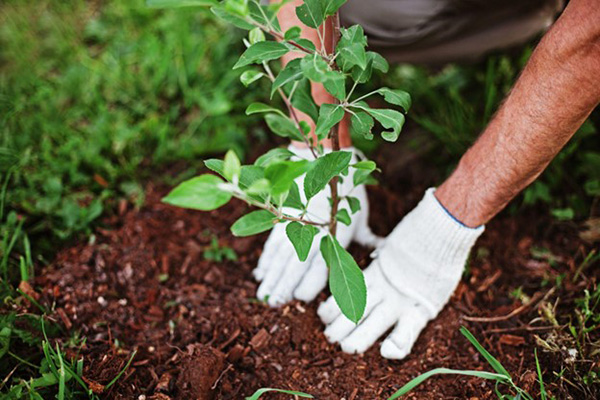
You’ve likely heard of carbon offset projects that involve reforestation or preventing deforestation. These create carbon credits because trees are excellent carbon sinks, meaning they sequester or absorb the CO2 in the air. But forestry isn’t the only nature-based CO2-reduction project out there. There are also projects concerning seagrasses, prairies, plains, and more.
For example, farmers can plant cover crops between their cash crops. These cover crops absorb CO2 and transfer it to the soil via their deep root system. Farmers can then use this CO2 sequestering to create carbon credits and sell them. They can also convert retired farmland, land that’s no longer suitable for cash crops, into prairies with vegetation that absorbs CO2 and transfers it to the soil. The farmers can also use this carbon reduction to create carbon credits they can sell.
The possibility to host nature-based CO2-reducing projects even extends to the private sector, as landowners can sell carbon credits from their lands. This can include planting trees on your property, agreeing not to cut down certain trees on your property, or planting other carbon-sequestering vegetation on your land. For farmers, some climate actions that create marketable carbon credits they can sell to emitters include converting old farmland to prairies, as mentioned above, regenerative agriculture, and no-till or reduced-till farming.
Regenerative farming is a philosophy that runs counter to industrial farming, as regenerative farmers always account for their environment, ecosystems, water bodies, and more in their farming practices.
No-till or reduced-till farming is when farmers use farming practices that do not include tilling the soil or dramatically reducing the amount of tilling. Tilling the soil brings organic materials to the surface, giving new plants food and nutrients. However, this also releases carbon dioxide and other GHG emissions from this material into the atmosphere. This is on top of the emissions the machinery makes when tilling the land.
How Much Is an Acre of Carbon Credits Worth?
An acre of land used for carbon sequestration or other methodologies for reducing a carbon footprint generally removes 0.2 to 1.5 metric tons of carbon annually. At current agricultural carbon credit prices, which broadly average $4-6 per ton but can run $10-35/ton for higher-quality, outcome-based programs, that works out to roughly $1-9 per acre per year at the broad-market rate, or $2-53 per acre for higher-paying programs.
According to a widely cited landowner survey, the average landowner wants to net around $21.60 per acre to make enrolling in carbon markets worth their while. That figure still sits above what many broad-market programs pay today, which is part of why program selection and credit quality matter so much for anyone actually considering this. Payouts also vary significantly by geographic location, soil type, and which program you enroll with.
How Many Acres Do You Need for Creating Carbon Credits?
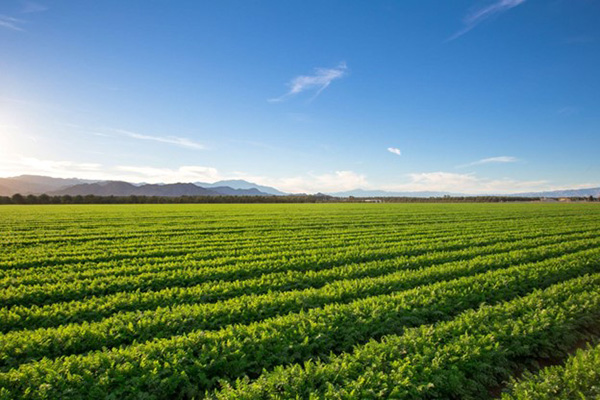
More is generally better when using your property as an income source through the creation of carbon credits. For example, the more property a farmer has, the more cover crops they can plant, and the more carbon credits they can create and sell. However, there are no laws requiring a certain property size to produce carbon credits. So there’s no minimum acreage you need for creating carbon credits.
That said, you must consider your time and monetary investment in creating the credits versus the payout. So, if you only have an acre that can sequester 0.5 metric tons of carbon, your payout at current broad-market pricing would likely be just $2-3 annually, though a higher-paying quality program could bring that closer to $5-18. That may be fine if there’s no extra work required, but if you must spend time maintaining crops in a special way, it’s likely not worth your time at the lower end of that range.
On the other side of the equation, if you have a 1,000-acre farm and can offset 1.5 tons of carbon per acre, you’re looking at a potential payout of roughly $6,000-9,000 annually at broad-market pricing, or considerably more, potentially $15,000-50,000+, if you qualify for a higher-paying, outcome-based program. If it’s relatively simple to change your farming practices or take on other carbon-sequestering actions, this can still be a worthwhile venture, but it’s worth shopping programs rather than assuming a single price point.
So how many acres do you need for a carbon credit? That depends on your goals and how valuable your time is. You also have to review the rules of the carbon marketplace that you’re selling on, as it may have a minimum CO2 offset requirement.
FAQ: Making Money From Carbon Credits
Can you actually make money from carbon credits?
Yes. You can trade existing carbon credits on the voluntary or compliance market, or generate your own through emissions-reducing or carbon-sequestering activities like reforestation, cover cropping, or regenerative farming, and sell those.
How much is a carbon credit worth in 2026?
It varies enormously by quality. The broad market average is roughly $4-6 per ton, while high-integrity, quality-screened credits that serious corporate buyers want run $15-80 per ton, and premium engineered removals can exceed $150-500 per ton.
Can I sell carbon credits from my own land?
Yes. Landowners and farmers can generate sellable credits through reforestation, planting cover crops, converting retired farmland to prairie, regenerative agriculture, and no-till farming, then sell the resulting credits on a voluntary marketplace.
How much can a farmer earn per acre from carbon credits?
At broad-market pricing, roughly $1-9 per acre per year depending on sequestration rate. Higher-quality, outcome-based programs can pay considerably more, sometimes $10-50+ per acre, depending on the program, region, and soil conditions.
Do I need a minimum amount of land to create carbon credits?
There’s no legal minimum acreage. What matters more is whether the payout is worth your time and whether you meet the specific marketplace’s minimum offset requirements, which vary by program.
Yes, You Can Earn Money With Carbon Credits

Whether buying and selling carbon credits on the voluntary carbon market for a profit, similar to how you’d make money in the stock market, or creating carbon credits and selling them, you can earn cash with carbon credits. And you don’t have to be a large business to earn these credits, either. Landowners and farmers can also cash in on carbon credits by using their tracts of land as carbon sinks or modifying their farming processes.
The best part is that you don’t need thousands of acres to capitalize on the carbon credit market. As long as you meet the minimum requirements set by the carbon marketplace you plan to sell on and the payoff amount is worth the investment of your time, then you can start using any size of land to create carbon credits. Just go in with realistic pricing expectations, since actual payouts vary far more than a single quoted price per ton suggests.
If you’re in the market to purchase voluntary carbon credits to reduce your net carbon footprint, Terrapass can help. We offer carbon removal credits for a wide range of business and personal situations, ranging from weddings to business travel and beyond.
Check out Terrapass today and see how we can help you reduce your carbon footprint.
Brought to you by terrapass.com