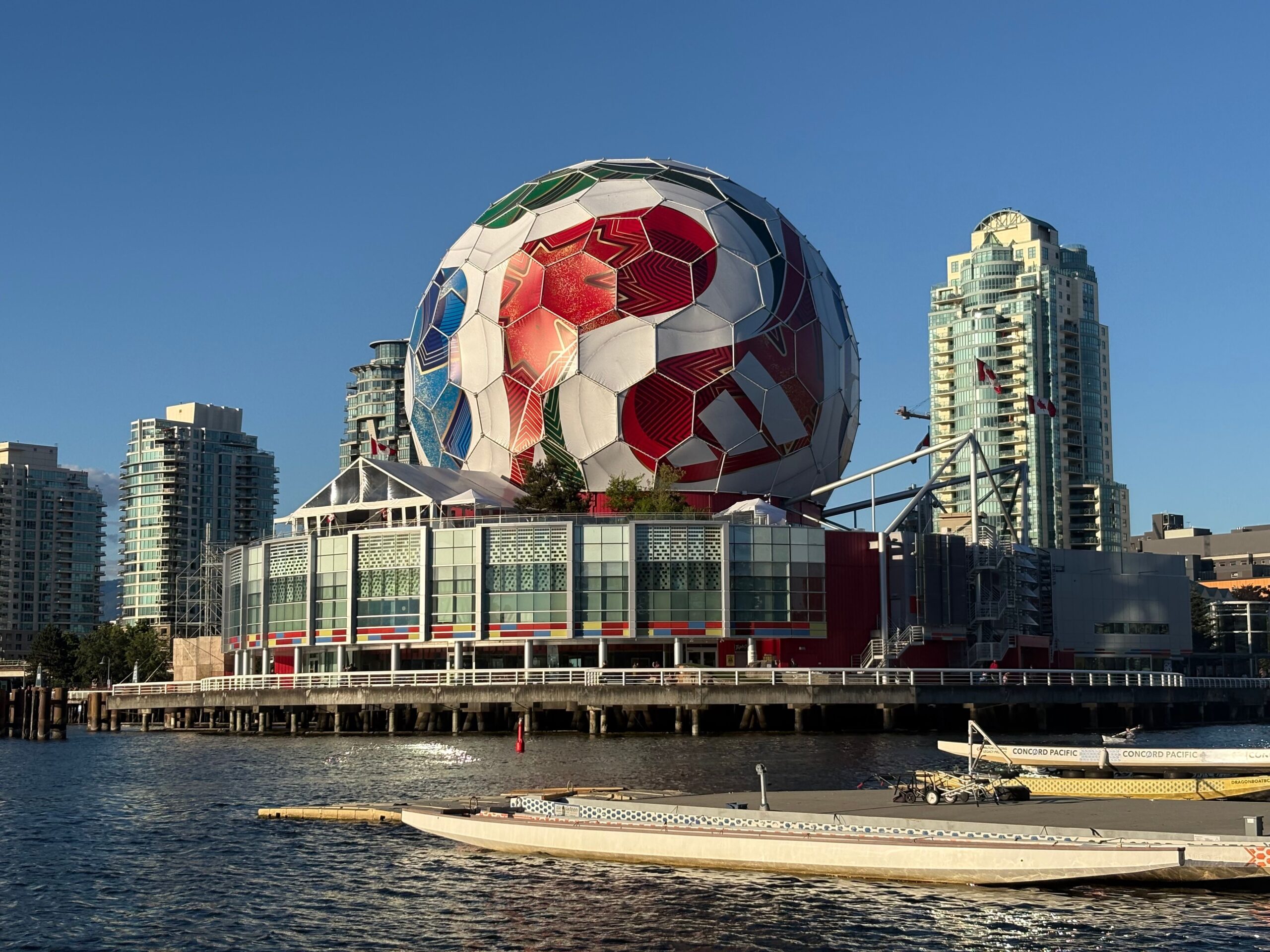
If you're considering the environmental impact of hosting an event, you might focus on logistics like energy efficiency, the food you serve, or the event materials distributed to attendees. While focusing on these types of areas can help soften the event's environmental footprint and greenhouse gas emissions, it's hard to build a truly sustainable event based on operational choices alone.
The problem is that events, especially large ones like conferences or major sporting events, tend to involve decisions outside your control, like how attendees travel to your event and how they consume resources at the event venue. These factors can create a significant negative impact, even when sustainability measures are in place.
Carbon emissions from people flying in to attend, one of the largest contributors to event related greenhouse gasses, can easily overshadow the emissions you avoid by reusing name badge lanyards from previous events, for example. And you might put out compost bins next to landfill and recycling containers, but at a busy, crowded event, an attendee might haphazardly throw whatever trash they have on hand into whatever bin they first see.
That's not to say you shouldn't try to focus on logistics, as sustainability isn't all or nothing. Every step helps. And you may be able to make meaningful progress toward sustainability goals, based on choices like venue location, reducing reliance on traditional power plants, and improving energy savings through more efficient or renewable energy sources, such as swapping diesel generators for solar ones.
But if you really want to make your event net zero or at least get closer to minimizing environmental impacts, buying high quality carbon credits and other environmental credits, like renewable energy certificates, is often critical.
Doing so isn't a shortcut to event sustainability. Instead, carbon credits can help you account for the areas outside your control, like travel emissions, as well as taking responsibility for the emissions impact of all the little details that you cannot reduce or avoid. Many carbon credit projects work to store carbon or support initiatives where emissions are actively reduced or carbon removed from the atmosphere, often at a large scale.
To ensure credibility, it’s important that carbon credits follow strict verification standards aligned with global frameworks like those supported by the United Nations. This helps prevent issues like double counting, where the same emissions reduction is claimed more than once.
Terrapass makes it easy to buy carbon credits for both individuals and businesses. You can buy credits that align with emissions from specific events like weddings, those that help address the impact of flying, or other personal or corporate packages based on your emissions goals.
Case Study: The Olympics

The Olympics haven't always had the best environmental reputation, such as with the legacy of host cities spinning up massive new sporting facilities that soon become abandoned. Recent Olympic Games, however, have made environmental sustainability and social responsibility more of a focal point.
For example, the Paris 2024 Games included significant sustainability efforts, such as with 95 percent of the venues being temporary or from preexisting infrastructure. Event organizers also added grid connections so that nearly all energy consumption came from renewable sources, reducing dependence on fossil fuel-based power plants and increasing overall energy savings, instead of relying as much on sources like diesel generators.
Yet despite reducing emissions by more than half compared to the preceding Rio and London summer Olympics, the Paris Games still had a carbon footprint of 1.59 million tCO2e, which was more than Netflix's total Scope 1 to 3 emissions that year, for comparison. Nearly half of those emissions came from spectators traveling to the Games, indicating how hard it is to cut your way to zero while still maintaining the power of live events.
So, Paris 2024 spent €12.1 million on carbon sequestration and avoidance credits that matched the 1.59 million tCO2e residual emissions total. This included financing projects such as cooking systems in several African countries, solar projects in Senegal and Vietnam, deforestation protection in Guatemala and Kenya, and mangrove restoration in Senegal. These types of initiatives help store carbon and contribute to carbon removed from the atmosphere on a large scale. The Organising Committee also financed some forestry projects within France to more directly compensate for emissions within its control.
Another type of credit usage showed up recently during the Milano Cortina 2026 Olympics. Their commitment to using virtually all clean electricity during the Games was made possible in part by Italian electricity company Enel procuring Guarantees of Origin, essentially a European version of renewable energy certificates, that correspond with renewable energy, as PBS reported.
And for the upcoming LA 2028 Olympics, the host has established an internal carbon price as a way to incentivize efficiencies while also generating funds for the LA28 Resilience Champions Fund. This will finance local improvements rather than international carbon offsets. For example, the fund will focus on areas including cooling solutions like native tree planting, wildfire resilience such as by planting fire resilient native plants, and ocean protection such as through beach cleanups.
Going forward, carbon credits could become even more important to Olympic events, considering that in 2020, the International Olympic Committee (IOC) set a requirement that, starting in 2030, all host cities would need to go even further by making the Games climate positive. Granted, that has arguably since been softened, such as with Brisbane 2032's contract being adjusted to make being climate positive more of a goal than a necessity.
Still, carbon credits and similar financing mechanisms will likely continue to provide ways for host cities to address unavoidable emissions, such as those associated with flying, while reducing their overall negative impact. In addition to addressing emissions, carbon credits also typically provide co benefits that support health and other positive outcomes in local communities.
Terrapass offers carbon credits across a broad range of project types, such as reforestation and landfill gas capture. You can support a mix of projects and their associated benefits with a monthly subscription of carbon credits for just $8.50 per employee that offsets what many businesses emit during normal operations, or you could build a carbon credit portfolio that aligns more with specific events if you're hosting.
Using Carbon Offsets for Your Own Events
While you're probably not hosting an Olympic sized event, similar strategies can be scaled to all sorts of other sustainable event planning, ranging from conferences to parties.
To fully balance emissions, an event organizer would ideally calculate total emissions. Depending on the scale of your event, this might require working with a third-party sustainability consultant that can assist with carbon accounting, or you might be able to use online carbon footprint calculators.
Even if you can't map out all of your emissions, you might calculate some of the largest sources, like flight emissions. A virtual event might avoid a big chunk of these travel emissions, but that might run counter to your goals of facilitating in person bonding that's hard to replicate online. So, if you're hosting a company retreat in another city, for example, you could add up the flight miles among your employees and calculate the associated emissions.
While this doesn't account for everything, such as on-site emissions like hotel energy usage and food, it can give you a good starting point. By at least purchasing flight carbon offsets, organizers can take responsibility for what is typically one of the largest emissions components of any large event, particularly those tied to greenhouse gasses. Meanwhile, you can make operational choices for your corporate event, like choosing a sustainable venue, reducing reliance on fossil fuel-based power plants, and improving energy savings through efficient practices.
You also may be able to buy carbon credits that align with the approximate emissions from specific types of events. For example, Terrapass sells carbon offsets for weddings, which you can scale according to how many guests you have and whether you also want to account for honeymoon emissions and the impact on water systems.
Whether you're hosting a personal event or a large corporate one, Terrapass offers a mix of ready to buy carbon offset packages, or our team of sustainability experts can help you develop a custom carbon offset plan as you aim to balance your carbon footprint. By supporting verified projects that operate at a large scale, you can address emissions responsibly while contributing to meaningful climate solutions.