The ozone layer and ozone depletion dominated the news from the late-1980s through the 2010s, leaving many worrying about a growing hole in this protective layer and the issues it would cause. Today, climate change and global warming caused by carbon dioxide emissions and other greenhouse gases are the dominant climate stories.
Does this mean ozone depletion is no longer a critical environmental issue and we can ease our minds about this once-important topic? No. Just because ozone depletion has lost some popularity with news stations as global warming has taken hold does not mean we can put it on the back burner and leave it sit.
We cover the continued importance of ozone depletion and more below.
Key takeaways
- The ozone layer is recovering, but it's a decades-long process, not a solved problem.
- The 2025 Antarctic ozone hole was the 5th smallest since 1992, continuing a steady recovery trend.
- The most recent scientific assessment projects full recovery around 2066 for Antarctica, 2045 for the Arctic, and 2040 for the rest of the world.
- The Montreal Protocol has achieved universal ratification with all 198 parties on board, making it one of the most successful environmental treaties in history.
- New threats like dichloromethane emissions are still being monitored and could delay recovery if left unchecked.
- Ozone depletion is not a major driver of climate change, but the two issues share many of the same root causes and solutions.
Ozone Depletion in 2026: The Latest Data
Here's where the science stands as of 2026, based on the most recent NOAA, NASA, and WMO/UNEP findings.
2026 ozone data snapshot
- 2025 ozone hole: The Antarctic ozone hole ranked as the 5th smallest since 1992, averaging 7.23 million square miles (18.71 million square kilometers) between September 7 and October 13, with a one-day maximum of 8.83 million square miles on September 9. That's roughly 30% smaller than the largest hole on record, in 2006.
- Recovery timeline: The 2022 WMO/UNEP Scientific Assessment of Ozone Depletion, the most recent quadrennial report (the next is due in 2026), projects the ozone layer will return to 1980 levels around 2066 over Antarctica, 2045 over the Arctic, and 2040 for the near-global average.
- Treaty status: The Montreal Protocol has achieved universal ratification, with all 198 parties on board. Its 2016 Kigali Amendment, which phases down HFCs, has been ratified by more than 160 parties so far.
- Earlier closure: The 2025 ozone hole closed on December 1, the earliest closure since 2019, according to the Copernicus Atmosphere Monitoring Service, another sign of the layer's continued recovery.
The overall story hasn't changed: recovery is real and on track, but it's a multi-decade process that depends on the world continuing to hold the line on the chemicals covered below.
What Is the Ozone Layer and Ozone Depletion?
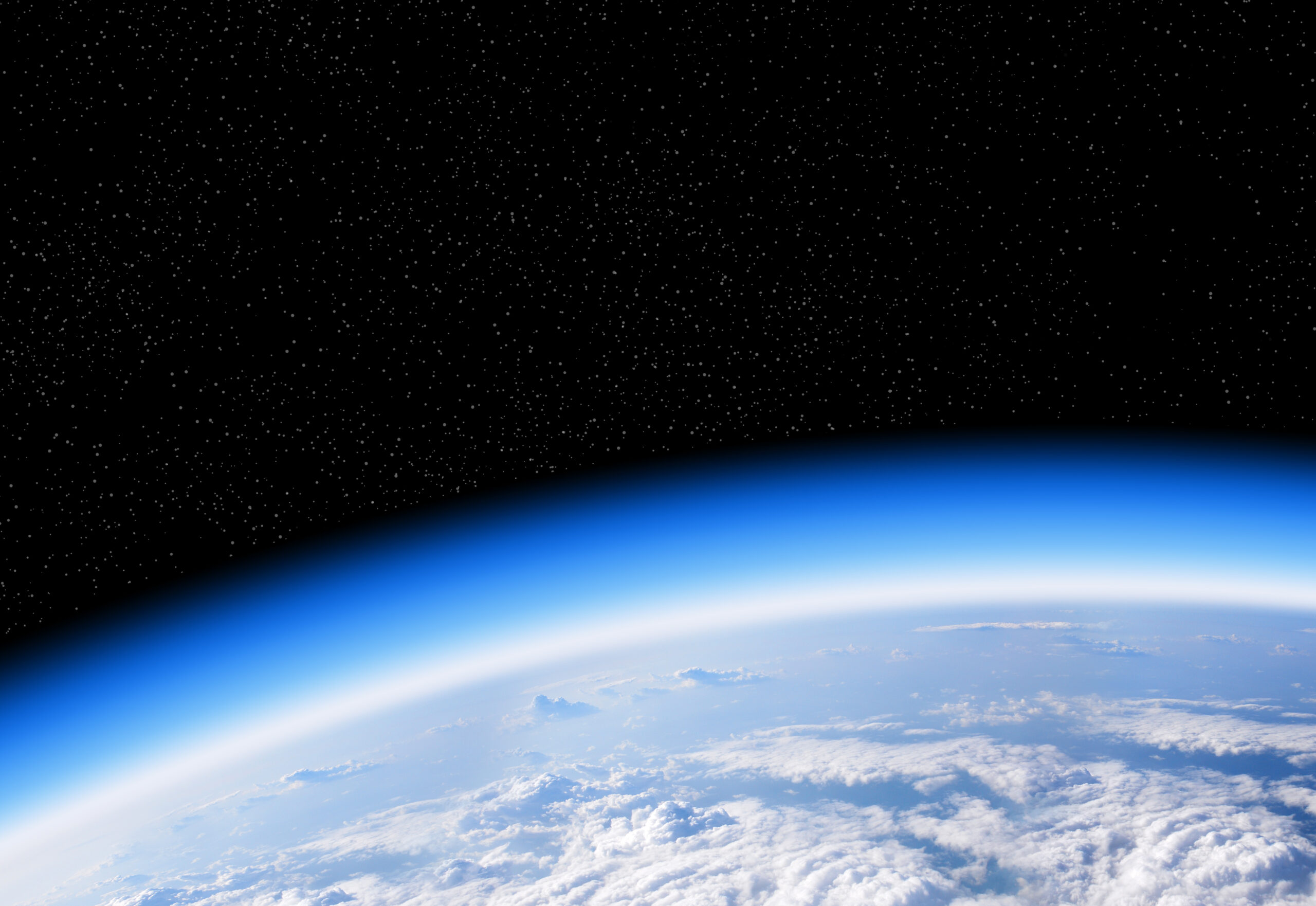
The ozone layer is a section of Earth's upper atmosphere, between roughly 9 and 22 miles above the surface of the Earth and just above the troposphere, containing a high concentration of ozone molecules. The ozone layer has the unique and important job of absorbing solar radiation, such as ultraviolet (UV) radiation, and keeping it from reaching the Earth's surface.
Ozone depletion is the slow thinning of this ozone layer, allowing a greater concentration of UV radiation to reach the Earth's surface. Most ozone depletion occurs in the polar regions, most notably over Antarctica.
What Are the Current Dangers to the Ozone Layer?
Chlorofluorocarbons (CFCs) are the biggest threat to the ozone layer today. Years ago, CFCs were found in aerosol sprays and refrigerator coolants. These CFCs themselves weren't destroying the ozone layer. Instead, it was the chemicals they broke down into as the sun's UV rays contacted them, such as chlorine.
Hydrochlorofluorocarbons (HCFCs) and hydrofluorocarbons (HFCs), which were once found in refrigerants, insulating foam, solvents, and more, are also ozone-depleting substances (ODS) because they release chlorine atoms in the stratosphere too, which destroys the Earth's ozone layer.
Fortunately, the 1987 Montreal Protocol on Substances That Deplete the Ozone Layer, which led to the phase-out of all CFCs and other ozone-depleting chemicals, has achieved universal ratification with all 198 parties on board. A 2016 amendment helped also phase out HCFCs. This phase-out led to the slowing of ozone loss from the Earth's atmosphere and the eventual evidence of ozone recovery starting in 2000 and continuing today.

Some other threats to the atmospheric ozone layer include chemicals like methyl bromide, halons, and methyl chloroform. These chemicals are used in various pesticides, fire extinguishers, and solvents, respectively.
New threats have since emerged in the depletion of the ozone layer, and a major one is dichloromethane emission. This is a naturally occurring chemical, but it can also be emitted from industrial production. In fact, from 2011 through 2019, China's dichloromethane emissions nearly tripled.
However, if dichloromethane emissions are held to current levels, it would only delay the ozone repair by about five years.
Is the Ozone Layer Still a Concern?

Yes, though the Antarctic ozone hole is showing signs of repair and is on pace to fully repair itself around 2066, it remains a serious concern. First, all the nations that ratified the Montreal Protocol must continue abiding by it. If not, this can bring ozone depletion back.
However, there are other ozone concerns too. A major issue was the 2018 discovery that though the upper stratosphere ozone concentration was increasing, the lower stratosphere levels were still declining. This could be a direct result of short-lived chlorinated chemicals, such as dichloromethane, reaching these lower levels before being eliminated by the sun's UV rays.
Can We Live Without the Ozone Layer?
No. All life on Earth as we know it would cease to exist without the ozone layer. This protective layer keeps the full power of the sun's UV radiation from reaching the surface of the Earth. If this radiation reaches the Earth's surface unimpeded, it can lead to skin cancer and cataracts. Plus, it is very harmful on many other levels to the DNA of plants and animals.
What Will Happen if the Ozone Layer Is Destroyed?
In just days of us losing the ozone layer protection, the radiation from the sun would make photosynthesis impossible for plants, leading to the mass extinction of many plants. Only the largest and slowest-growing plants would survive this wave. Eventually, though, even these larger and more resilient plants, such as some of the largest trees in the world, would succumb.
This would lead to the death of most herbivores on the planet, eventually choking off the food supply for carnivores and omnivores. This impact to the ecosystem would eventually lead to the worldwide extinction of all animals. And any remaining animals would likely die from skin cancer due to the sun's harmful radiation.
On top of all this, you would not be able to set foot in the sunlight without almost instantly starting to burn, as the unfiltered sunlight contacts your skin.
Is There Still a Hole in the Ozone Layer in 2026?
Yes, though it continues to shrink. The 2025 Antarctic ozone hole ranked as the 5th smallest since 1992, averaging 7.23 million square miles (18.71 million square kilometers) at its peak depletion period between September 7 and October 13, with a one-day maximum extent of 8.83 million square miles on September 9. That's roughly 30% smaller than the largest hole on record, which averaged 10.27 million square miles in 2006. The 2025 hole also closed earlier than usual, on December 1, the earliest closure since 2019.
How Does Ozone Depletion Affect Human Life?
Ozone depletion can have a range of effects on human life, directly and indirectly. Most directly, ozone depletion increases the amount of UV radiation that reaches the Earth's surface. This can lead to increased skin cancer cases, cataracts, and even compromised immune systems. It is also believed these UV rays increase the cases of melanoma, the most deadly skin cancer.
On a more indirect level, ozone depletion can reduce the yields of certain crops, such as soybeans, reducing our food supply. Plus, increased ultraviolet radiation is also believed to put phytoplankton, the base food source in the ocean, under stress. This can work its way up the food chain, impacting our food supply from the seas.
Ozone loss can also impact climate change, as ozone depletion in the lower stratosphere can create a cooling effect on the Earth. However, ozone depletion is not viewed as a significant contributor to overall climate change or global warming.
How Many Years Until the Ozone Layer Is Gone?
Fortunately, the Montreal Protocol agreement has done its job and lowered the amount of ozone-depleting emissions to a point where ozone depletion is now ozone recovery. Instead of counting down the days until the ozone disappears, the 2022 WMO/UNEP Scientific Assessment of Ozone Depletion, the most recent quadrennial report, projects that total column ozone will return to 1980 values around 2066 over Antarctica, around 2045 over the Arctic, and around 2040 for the near-global average. The next full assessment is due in 2026.
This reversal does not mean we're out of the woods on stratospheric ozone depletion, though. We cannot become complacent in the recovery and have nations becoming lax on the Montreal Protocol rules. Plus, researchers must continue to identify and help reduce new threats to the stratospheric ozone layer, such as dichloromethane emissions.
What Human Activities Cause Ozone Depletion?
According to NOAA.gov, there are natural sources of bromine and chlorine, which can cause ozone depletion. However, only 17% of the chlorine and 30% of the bromine in the air are from natural sources. The rest are from human activities.
These activities include:
- Refrigerant evacuation from air conditioners and refrigerators directly into the air
- Foam blowing
- Use of aerosol propellants
- Cleaning metal and electrical components
- Use of certain pesticides
- Use of halons in fire extinguishers and as computer protection
- Use of chlorine gasses in pools and wastewater plants
- Burning fossil fuels
Can We Breathe Ozone?
While ozone is helpful in the stratosphere, blocking harmful UV-A and UV-B radiation from the sun, it is not something humans would breathe. Ozone overexposure can cause headaches, coughing, dry throat, shortness of breath, a heavy feeling in the chest, and fluid in the lungs, according to the CDC. And high levels of exposure or consistent ozone exposure can lead to more severe conditions, such as asthma.
How Can You Help the Ozone Layer Recover?
The ozone layer is in recovery and on pace to make a full rebound to pre-1980s conditions later this century, but you can still help speed it along with a few tweaks to your lifestyle.
Start by purchasing cooling appliances, such as air conditioners and refrigerators, that don't use HCFCs as refrigerants. You can also ensure any aerosol products you purchase don't use HCFCs or CFCs as their propellants.
For existing cooling appliances, ensure you have regular inspections and maintenance carried out. This helps spot and repair leaks before they emit too many harmful chemicals into the atmosphere. And if your system requires service, ensure a licensed professional properly evacuates any refrigerant. You can also have some existing cooling appliances retrofitted to newer, less harmful refrigerants.

The Ozone Is in Recovery, But Ozone Depletion Remains Critical

Ozone depletion is in reverse, and we're now seeing a steady recovery. In fact, experts anticipate a full ozone density recovery thanks to the widely adopted Montreal Protocol. Though the ozone layer is recovering, now's not the time to ease up and start releasing ODS, such as HCFCs, HFCs, and CFCs into the atmosphere. Instead, we must maintain the path of limiting these chemicals and continue monitoring for new ODS that require control or outright banning.
Ozone depletion may have little to do with climate change, but you can do your part to slow the impact of global warming by offsetting your carbon footprint. You can do so by purchasing carbon offset credits from Terrapass. We offer many carbon removal products to cover various situations, including air travel and more.
Brought to you by terrapass.com